10/20/2026
Any forecast of Paradise Valley real estate must consider its two sub-markets: homes priced below $8 million and those priced at $8 million or more. For a closer look at how differently these two markets perform, see the Paradise Valley Q3 2026 Market Report.
At a Glance: Q3 Market Metrics
Median Sales Price: $4.7M, compared to around $4.5M in Q2 26 and Q3 25.
Sale to List Ratio: 92%. This is consistent with prior quarters.
Inventory: 104, an increase over the 92 in Q2.
Months of Supply: 6.1, compared to 4.5 in Q2.
There are three major forces affecting these sub-markets in different ways: higher interest rates, changing buyer preferences, and inflation.
Below $8 million, buyers are more impacted by higher mortgage rates.
Above $8 million, a higher proportion of cash buyers are more resilient to rate changes.
Buyer preferences are shifting towards new, move-in-ready homes. Inflationary land and construction costs make homes more expensive to build.
These three factors contribute to a fourth trend: a growing supply of new homes in the $8 million-plus market.
Here’s how these four trends will help shape Paradise Valley's real estate market in Q4 2026 and throughout 2027.
Luxury Real Estate Trends Shaping the 2027 Outlook
Research shows that buyers prioritize these features:
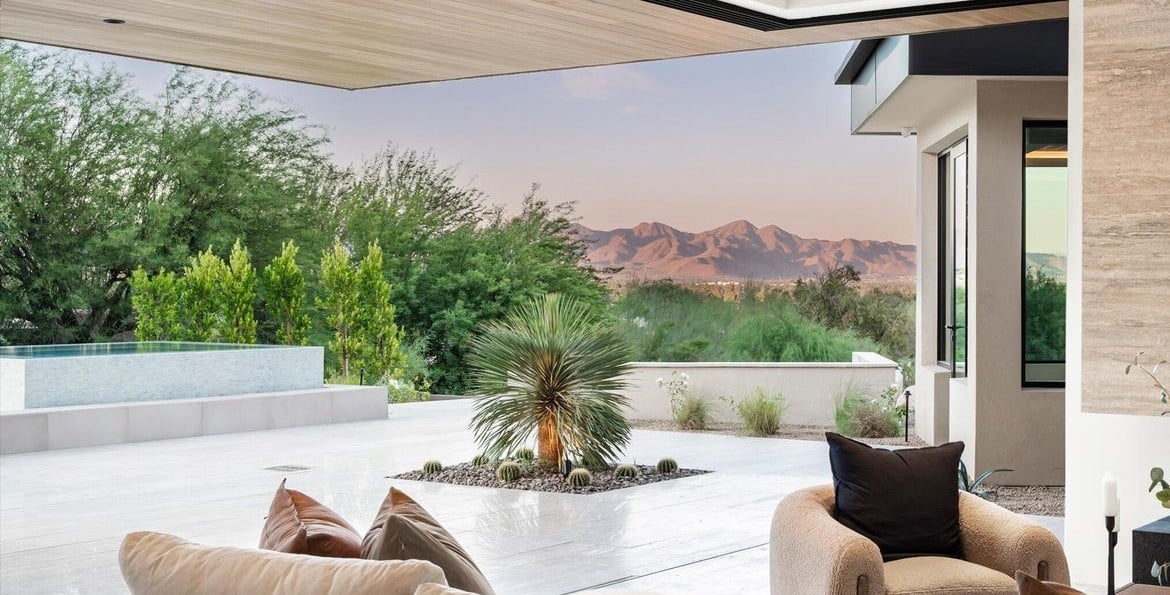
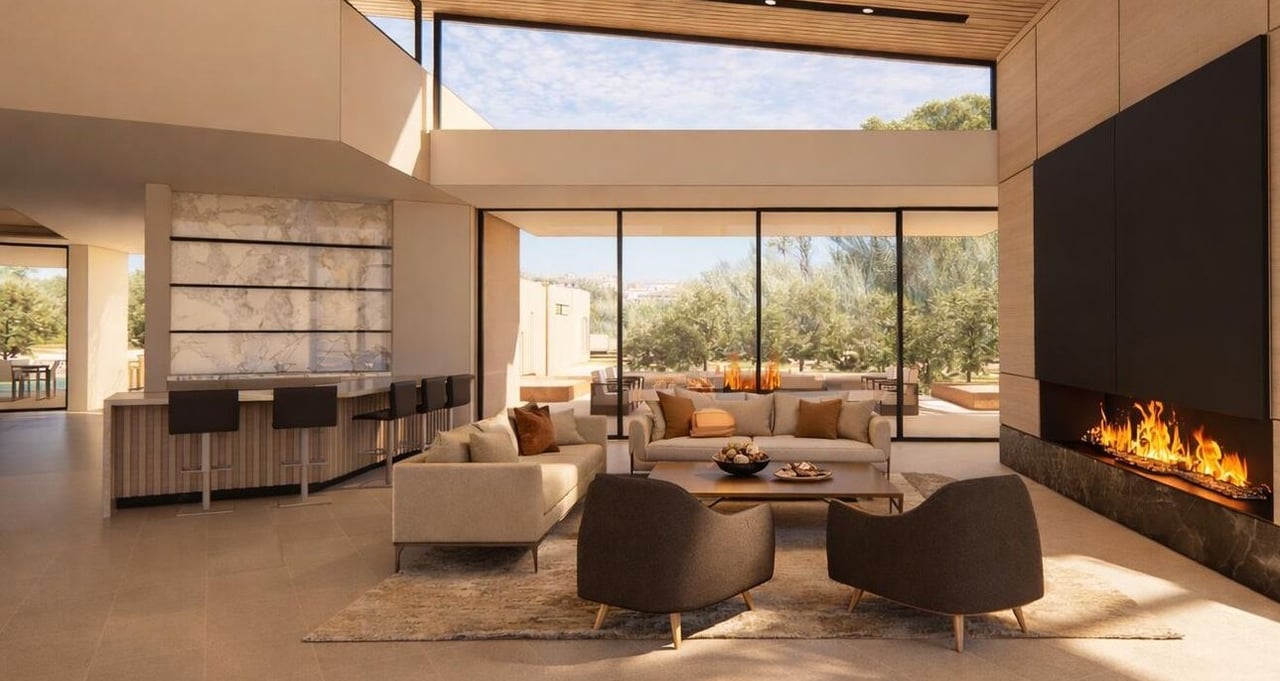
Active lifestyles prioritize open, centralized kitchens, family rooms, and outdoor living.
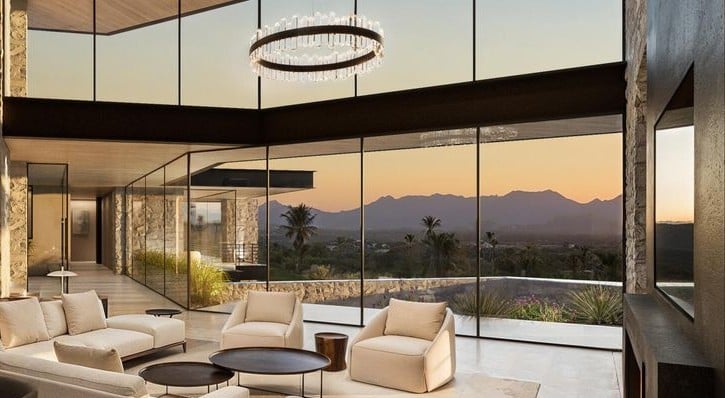
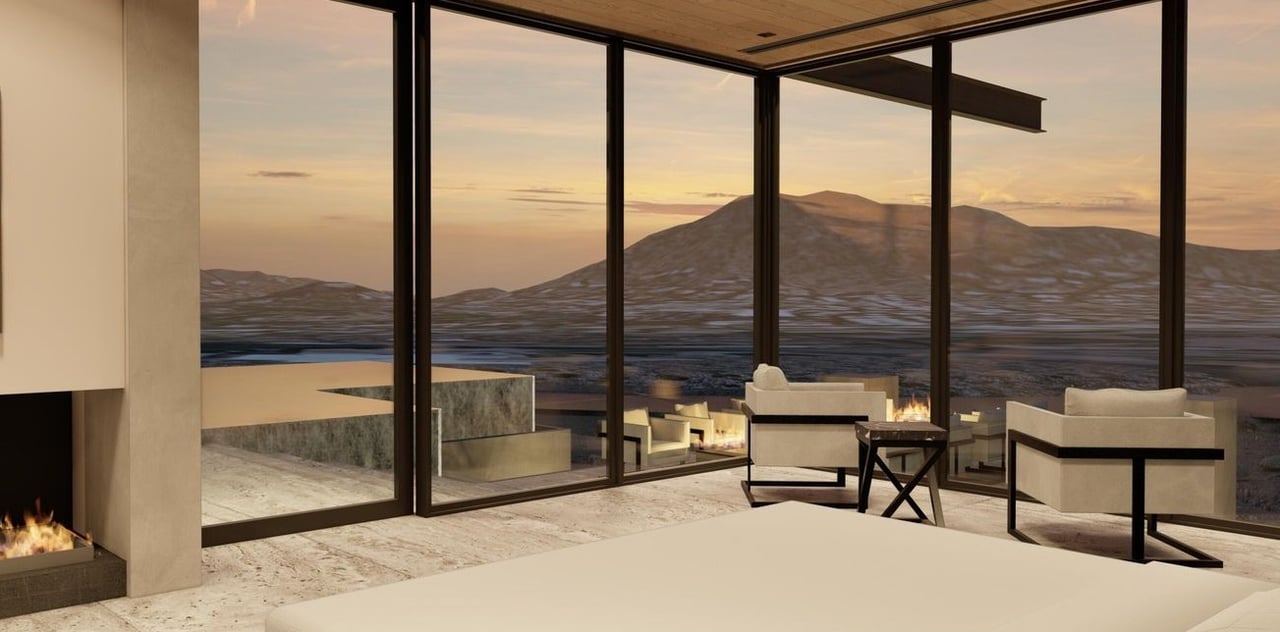
Technology allows open floor plans and floor-to-ceiling windows.
Time-crunched buyers want move-in ready homes.
As a result, buyers want the features found in homes built since 2018. Views, privacy, and neighborhood are still important, but the condition and features of the home heavily influence buyer decisions. For more, see The Forces Reshaping Luxury Real Estate.
Higher Interest Rates
The Federal Reserve projected it will keep rates at current levels in its fight to tame inflation. This affects variable rate mortgages directly, and fixed-rate mortgages indirectly via its impact on Treasury yields.
Table 1. Total Closed | Q1 - Q3 2021 | Q1 - Q3 2026 | % Change |
|---|---|---|---|
Under $8M | 281 | 139 | -51% |
$8M+ | 12 | 46 | 283% |
Total | 293 | 185 | -37% |
Source: Arizona Regional Multiple Listing Service. This report captures single family homes in the municipality of Paradise Valley. It excludes homes in the zip code of 85253 that are actually in the cities of Scottsdale or Phoenix. It only includes homes with lots more than .7 acres to exclude smaller subdivisions, resort, condominium, and townhome communities.
Higher rates contributed to a 37% decline in sales between 2021 and 2026. This impacted homes below $8M the most, which fell by 51%. At the same time, sales of homes above $8M nearly quadrupled. Other drivers include rising home prices, changing buyer preferences and the fact that a larger percentage of sales in the high end price points are paid with cash. For more, see How Higher Interest Rates Affect Paradise Valley Real Estate.
Inflation
It's expected that inflation will continue to impact home renovation and new construction pricing. Construction costs in the Phoenix area have risen 50% since 2020.
Source: AZBEX. Note, this includes commercial construction materials.
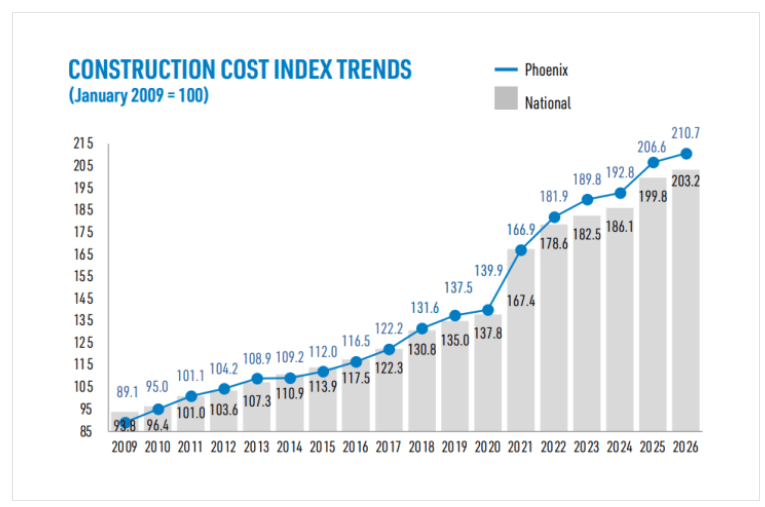
In addition, the cost of a one-acre lot in Paradise Valley is averaging around $3.5M, with a recent high of $5.5M for an acre in Finisterre. (Source: MLS)
Costs and prices are expected to remain at this elevated level for new construction and renovated homes.
High Supply
The supply of $8M+ homes has increased by more than a third since the second quarter.
Table 2. Active Listings | Q2 2026 | Q3 2026 | % Change | Q3 MOI |
|---|---|---|---|---|
Under $8M | 53 | 51 | -4% | 4 |
$8M+ | 39 | 53 | 36% | 12 |
Total | 92 | 104 | 13% | 6 |
Source: Arizona Regional Multiple Listing Service.
Most of those homes are new construction. Although sales at this price point have seen a record-breaking year, one result is now 12 Months of Inventory (MOI). That indicates a possible oversupply.
Table 3. Median Prices | Q3 2025 | Q3 2026 | % Change |
|---|---|---|---|
Under $8M | $4.1M | $4.3M | 4.9% |
$8M+ | $11.5M | $12M | 4.4% |
Total | $4.5M | $4.7M | 4.4% |
Source: Arizona Regional Multiple Listing Service.
Price increases remained relatively moderate between Q3 2025 and Q3 2026. That contrasts with the 90% increase between 2020 and 2025. For more see, What Is the ROI on Real Estate vs. the Stock Market?
Outlook for Q4 2026 and Beyond
As a result of this divergence, the most useful projection distinguishes between the two Paradise Valley sub-markets.
Below $8M
Sales will continue to react to pressure from high interest rates. However, seasonal demand means that sales will at least remain steady through Q4 and increase conservatively above last year’s sales. Prices may move slightly higher than the current median of $4.3M.
Since more and more buyers are looking for move-in ready homes, sellers that haven’t renovated older homes to modern standards face three choices. They can either sell for lot value (depending on location and views), undergo structural renovation (including open floor plan, larger windows, and possibly higher ceilings), or sell at a market-clearing cost.
$8M and Above
Homes at this price point face increasing pressure from the supply of new construction. The supply alone could attract more ultra-high net worth (UHNW) buyers, especially in Q1 27. Inflation won’t affect these buyers as much as in the lower price points, although a drop in the stock market would. Record prices at the top end will continue to make headlines, but the median price will continue to increase moderately.
Builders of new homes should determine how they will market their homes to beat the increased competition. This includes isolating what ultra-high net worth buyers want, highlighting their home’s distinguishing features, and marketing aggressively to new markets.
Sellers of older $8M+ homes have a different problem. Many of them see record-setting prices and assume that means all of Paradise Valley is becoming that attractive. They price accordingly, with the result of long days on market and eventual price cuts.